Currently into

  • Deafheaven
  • Good Omens
  • James Bond novels that I know are terrible

Wednesday, 14 August 2019

A New Genre Awaits


For the past few weeks, I have put over 40 hours into Fire Emblem: Three Houses. This in itself is nothing new or surprising - since discovering Awakening on 3DS, I have completed every game in the series, including all three pathways in Fates. Clearly, Fire Emblem is a series that is close to my heart.

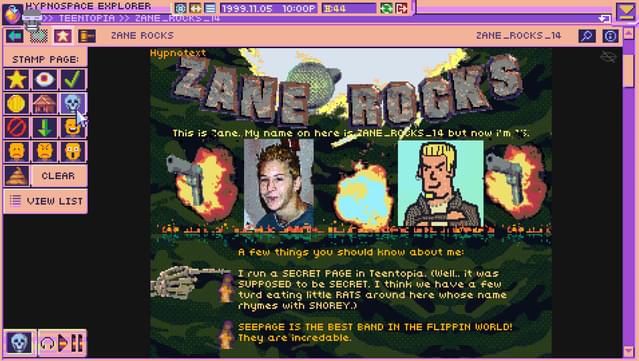
At the start of 2019, however, I was also hooked on another game - one that has resonated even stronger with me than Fire Emblem ever will - Hypnospace Outlaw, perhaps a lesser known title, which is available on the Steam service on PC. Hypnospace is a game that I still think about - perhaps not on a daily basis, but certainly weekly. In many ways, it was a game tailored to my own age and demographic, in addition to my own online history.

In exploring both of those games, and by subsequently noting elements of these titles that resonate through other games I have enjoyed in the past 15 years, namely: Phoenix Wright, Virtue's Last Reward, and Persona 4: Golden, I have come to a stark realisation.


I really like visual novels.


(Hypnospace Outlaw, 2019, No More Robots)

(Fire Emblem: Three Houses, 2019, Nintendo)


In all of the titles mentioned above, there is a different mechanic with the way in which the player navigates the game; with Fire Emblem, your character engages, between discussions, with turn based combat with a multitude of enemies; in Hypnospace, you are surfing, and sleuthing, an alternate reality simulacrum of the internet, circa 1999; Phoenix Wright sees you making choices of evidence / conversation topics to win defence cases in court; Virtue's has your protagonist solve fiendish escape-room games in order to progress, and in Persona, the dialogue is couched within a massively-scoped role-playing game, requiring grinding (see previous posts) and careful choice of battle mechanics. 

All of these games, however, use the trapping of a variety of different genres of titles that all fold back into one - the visual novel. 
Popular mostly in Japan, the visual novel is as literal as its title suggests - that the narrative of a story will unfold with character reactions or settings to represent what is described. These can vary from the absolute mundane - a character's day at school, as in Persona, to romantic choices, to stories that carry elements of pornography in their descriptions. 

Perhaps to call this a 'genre' is a misconception.

What visual novels allow, is an element of author control that can often be missing in other titles, such as open world-games. Imagine a Grand Theft Auto where you are told on your screen that "Trevor walked in to the bar and sat and had a drink".For any players of the game, this is absolutely one of the things that Trevor may do. However, Trevor is also a psychotic, unhinged character, one who will murder for fun, and is supposed to be the player's cipher for whatever mayhem they may wish to unleash. The visual novel works when there is a story to be told, and the player may have some (note, some)agency as to the outcome, but these endings are set in stone. 

And yet, I play through a number of titles, including GTA, Assassin's Creed, Watch Dogs, Saint's Row, all open world games, despite enjoying, and preferring the authored content. The reason for this is I love an ending. I love to see where the game will take me - how will my murderous character ultimately finish the game?

In a previous post, I discussed the ending of the game GTAIV, because I believe the pathos of the finale made the rest of the game important. Every decision your character made, led them to one of two outcomes, one I believe to be more important than the other. I am a huge fan of authored content, and enjoy following the journey that creators take me. It may be time for the admission (and absolutely not humble-brag) that I have never played Minecraft as I did not see the purpose of it, and bounced off The Sims, although with a slower curve, because I could not see the end point.

The visual novel is exciting, because, as mentioned, the trappings around it can appeal to a number of different type of players. What I like most around it, much like good cinema, is following the vision of a creator. I want to see where they feel the characters should go, and, if I don't agree with this, to be able to at least have a concept of their journey. 


Thursday, 8 August 2019

I Am Bad At Monster Hunter


It is a truth universally acknowledged, but never commented on. I am terrible at  Monster Hunter games. I have been playing them for a decade now, as of 2019, and I still cannot quite do the things it wants me to do.

For the uninitiated, Monster Hunter is a series of games made by Capcom, which have spanned consoles from Sony, Nintendo and Microsoft. These are third person action games, with very specific controls - for each action you do, you cannot stop it. Should you stop to sharpen your weapon (essential as it depletes its sharpness over time) your character is locked in a 7-10 second animation of sharpening, during which time, of course, you can be attacked. The games themselves may vare, but each of them is defined by a few simple ideas.

1) You will get better the more you play - more on this later.
2) The game is desinged to be replayed and replayed - as you kill monsters, they issue 'drops' which are specific items. Players will often 'farm' (replay) monsters to try to get specific items, which may show up as little as 1-3% of the time.
3) The monsters themselves have no health bars, or no otherwise explicit indicators as to how they are doing. The player is supposed to 'read' the health of the monster by looking for signs such as - deterioration of their scales on sides / tails; limping, particularly in combination with heavy breathing (shown by steam arising from their mouths) ; the running away of a monster, most likely towards a place it can sleep and restore energy.

The most recent title in this series is Monster Hunter World. This was released last year on Xbox, PS4 and PC. As such, it diverted from the previous place these games were published - the Nintendo systems, most notably the 3DS. As a result of this, I have had far less time to play the game due to not having it on transit
This excuses nothing. I am bad at Monster Hunter. 


Monster Hunter World (Capcom, 2018) 


The game is due to have its first massive expansion next year, known as Iceborne. This follows a tradition of games where the concept of 'G Rank' re-releases exists - you've destroyed all the monsters, let's add another 10-20 and they're REALLY hard. 

So it was that in advance of this, I returned to World this morning. I discovered I was seriously lacking behind, with several important plot points in front of me. And then I hit it. Paolumu. 

Paolumu is more fun to describe than to actually post a picture of. Imagine a bat. Now imagine its an albino bat. Now imagine that when it gets angry, its neck fills with air like a puffer fish and it uses this to attack you. Paolumu is cool. 
Unfortunately, it also exposed a glaring weakness in how I play the game. When I play Monster Hunter, in the varying ways a character can organise themselves, I always go for power. A weapon called the 'dual blades' is, well, exactly that. Thus it was this morning that I sprang into action and was thoroughly routed. There is a system called the 'SOS Flare' on the game - hit it, and it allows other players to join your game and try to destroy the monster together. No one came.


There is a type of game made in Japan, that Monster Hunter falls into, that I have never managed to engage with. These games prize player skill over gaining reward after reward. In these games, such as Demons Souls, Dark Souls, Bloodborne, the reward for the player is the knowledge they have earned - they have learned their enemy's patterns, they have mastered the 'tells' of their attacks. Knowledge is power. And Monster Hunter falls into that category. Whilst your character may increase their armour against particular foes, their health will never significantly increase. In the game, the ability to read each monster's tell becomes power. 

And I have never mastered this. Every journey I have made in these games was through brute-force, or relying on the support of people far better than I. I adore the Monster Hunter world. It's fun, funny, and always full of surprises. But what the title tells me is that my own skills lie in games that reward the individual - here, take this perk that makes X enemies do Y. It's a world beyond me. Again, or so I thought until I considered what I would play next - Mario Maker 2.

The game I love most, Super Mario World, also fits into the Dark Souls/Monster Hunter category. In Mario titles, Mario's move set is incredibly defined - it's very likely that people unfamiliar with modern games have a strong understanding of the mechanics of how the Italian plumber operates. Every move is co-ordinated, and in his world, every mistake that is made is one of the player.. It's a distillation of the concept of 'fairness' into videogames. Yet part of me cannot extrapolate that into other titles - Bloodborne remains and interesting enigma, I spent an hour once trying to find a ladder in Dark Souls. I will stick with Monster Hunter,  through thick and thin, because the game world,. and the sense of discovery far outweigh my own failings. 

Please help me complete Iceborne. SOS Flares are at the ready. 

Tuesday, 6 August 2019

Nihilism and Games


One hundred years ago, in one of my favourite novels, F. Scott Fitzgerald allegorised the death of the American Dream in The Great Gatsby. The promise of making it in the world, of being able to rise above one's assigned status was one that formed the founding of the Constitution, and of the deplorable Second Amendment that shortly followed - that the freedom of the individual had the right to strike back against governmental dictats.

In the past week, we have seen sadly all too-recognisable horror in The States, following two mass shootings. The subsequent fallout has seen people across the media and political spectrum, blame, amongst other elements, videogames. as a significant trigger, despite the overwhelming and regular evidence that suggests otherwise. My own first encounter with this blame-shifting came in 1998, following the massacre at Columbine. I remember, as a very young teenager, reading of Quake and Marilyn Manson as key triggers for the shooters.

Since those shootings, and considering the foundations of the 'American Dream', I've been thinking a lot about Grand Theft Auto IV, a game I can't say I particularly love - Rockstar games always seem more a curio than a game to be enjoyed to me. Yet, what sticks to me about the title, moreso than any other game in their canon, is the tragic arc that the character takes. Unlike Red Dead Redemption 2's solitary story, GTAIV casts a dark shadow not only over the protagonist, Niko Belllic's life, but over a country in which the society has been left to run, unchecked and unfettered by a 200 year old document. In doing so, it debunks the myth that videogames themselves cause violence, and instead looks at societal, political and economic causes that lead to people carrying out despicable acts of violence.


Grand Thedt Auto IV (Xbox 360, PS3, PC), 2013


With GTAIV I wish to specifically focus upon the ending of the game, so this is obviously a spoiler warning at this point. 

In the initial trailer for the game, channeling the film Koyaanisqatsi with its initial trailer, Niko Bellic hints at his past - fleeing from violence, war crimes, and the horrors of Eastern Europe, evoking such tragedies as those in Sarajevo. 


In Reggio's film, which the trailer replicates, down to the Phillip Glass score, the title translates in Hopi as 'a life filled with corruption', suggesting that Niko's dreams of escaping the horrors of his past to the 'utopia' of America will be one that is for naught.
And so it is. 
Throughout the 20-30 hours of the game, whilst dating, drinking, bowling with your cousin, and other sidelines of modern privileged existence, Niko's character becomes embroiled in a cycle of violence, one which shadows itself under the illusion of 'The American Dream'. Much like Fitzgerald's Gatsby, Niko has to become someone else, someone who can adapt into a variety of circles, be they biker gangs or the mob, in order to make his way in the world. And this brings the core of the game, and the reality of America, to the fore. There is not a sense of 'every man makes his own way' in either the game, or the country. 

Instead, what we have is a game in which there is one identity perpetrated, one in which the cycle of violence, guns, and power are perpetrated. In America, the only way to seem powerful is to look powerful. 

The climax of the game is an extended chase sequence in which your character, Roman, your cousin, and a Rastafarian character named Jacob end up chasing after either the mob boss Jimmy who initially told them 'everybody is trying to fuck over each other - they just do it with smiles on their faces.,' or with another immigrant, Dimitri Rascalov. The second of these two stories is the one I wish to focus on. 

Dimitri and Niko both share the same DNA in that they believe America will be the place where their lives can be changed for the better. Both are corruptedd by 'old' America, that is, Jimmy, where there is only the hegemony of 'America' as first and foremost one's own livelihood, as documented in the Constittuion. 

Dimitri does murder Jimmy in this ending of the game, however this is only for Todorovian purposes, to take his place as the new face of this status quo. 

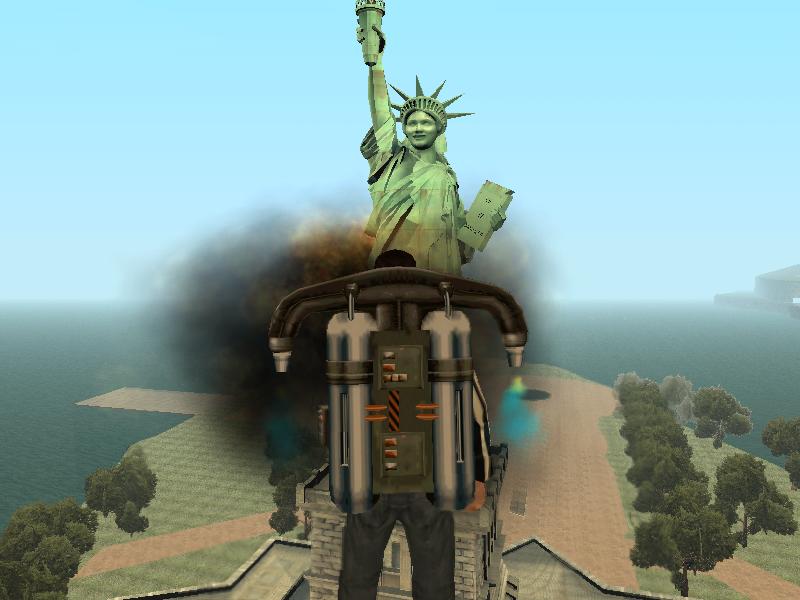
At the end of the game, your character engages in a prolonged chase with Dimitri, only to end up murdering him. The site of this revenge? The Statue of Happiness, Liberty City's own version of New York's Statue of Liberty. Whilst the Houser brothers, voices of the game series, have never been known for their subtlety, the symbolism of the game's final act, one in which Niko becomes part of the system of violence, of destruction, of America, is an incredibly powerful one. Niko ends the game considerably richer than he started, but without the solace he was looking for when he first landed on Liberty City. 

Games have the power to do more than give us power fantasies. They can comment, they can criticise, they can suggest new possibilities. Grand Theft Auto IV is an an incredible game in scope, if not always execution. Beyond the wanton mayhem that the series constantly provides, however, is a prescient, if not important, suggestion about the state of the Nation, the failings of its original document, but sadly, not a way out. 

Friday, 15 February 2019

Mediocrity


Crackdown 3 (Microsoft, 2019)


A Quiet Place (Paramount, 2018)

Most of us exist in the normality of everyday life. We go to work, we see our direct debits come out, we power on. Mediocrity is the general status of our lives. Every now and again, a friend's wedding, a funeral, a birth serves to punctuate what we do, but we endure throughout, nonetheless. 
Mediocrity is fine, and it serves to allow us to feel the highs and lows of life. Where mediocrity seems to have no place, however is in criticism. To criticise is to hate, to love, surely? 
Where place for someone who shrugs at a film or text because it does not appease nor dislike them?

This piece is to discuss what toxic (and by toxic I mean both pro and con) fandom can do for the mediums. At present, it feels as if culture is determined by the best or the worst in society.

Now, let me not be the first to say that mediocrity can [url=https://www.sixthtone.com/news/1176/mediocrity-of-chinas-films-laid-bare-after-paltry-box-office-takings]hurt[/url] a box office taking, and that the concept of appealing or hitting fans is important. That's not what is being discussed here. The concept here is about saying that calling a title a 'mediocre' or '5/10' seems to hold with it some sort of toxin that requires fans to either adore or despise what has been said. 

Mediocrity is fine. By its literal definition.

So, let's move on to titles.

As of writing, I very recently played Crackdown 3, a title I had been awaiting for many many years, specifically because of the way that it was published and [url=https://www.eurogamer.net/articles/2017-06-19-clearing-up-confusion-surrounding-crackdown-3-destruction]marketed[/url] right up until its release. We found it to be such a generic and sagging title.

A Quiet Place also showed up at the same time, having been so highly praised across the board. Yet my wife and I found ourselves giggling throught the course of the film. We didn't care for the main characters who seemed to exist solely for the purpose of falling into every trope we had explored in our lives. When you are literally running the [url=https://medium.com/@TheFilmJournal/updating-the-final-girl-theory-b37ec0b1acf4]final girl theory[/url] you must be aware as to what you aqr making.

This brings me to the crux here. I don't hate either. They're both decent things that will pass time. I wouldn't fight against either. The concern comes from the fact that in our current social media addled landscape, we attach our our identities to games, to films. Because we like them, they represent elements of us. And to a certain extent, this is nothing new, we have always projected ourselves through our media. What concerns now is the attachment of identity to a title. If one despises it, they despise me. There is nothing new about this brand theory, but living in 2019, it has never felt so unhappy. Crackdown 3 is not the best game of the year. A Quiet Place is not the best movie of the year. And that's fine. 

Tuesday, 29 August 2017

Summer 2017


Summer 2017 - An Analysis


It has been fairly widely reported that this has been one of the worst summers in recent memory for films - certainly in America, at least.  The question then becomes - why? What has caused this year to be so down, when normal scapegoats like Netflix or sports have been so conspicuously absent. Why has 2017 seen such a massive downturn in box office receipts? 

The answers to these questions are not straighforward, despite what many pundits or prognosticators may argue. However, the purpose of this post is not simply to try to examine what has occured this year at the domestic box office (interestingly the foreign box office was 3% up on previous years - but more on that later), but to also form what can be best described as a 'primer' for those who may not understand the rather complex ins and outs of the box office and studio finance structure. 

In order to demonstrate this, I will be looking at a variety of films that have been released over 2017, but first and foremost I wish to look at  a primer behind film financing, so that in a second post I can therefore drill down into specific problems with 2017's line-up. It is important to understand several key concepts, so that, when the numbers do arrive, we are able to look at them in totality, not simply as figures. To do this, there have been two films released this year that exemplify the dichotomy between money earned and money costed. 

War for the Planet of the Apes, 20th Century Fox (2017)

and also 

Valerian and the City of a Thousand Planets, Europacorp (2017)

Both Valerian and War released in the mid-point of Summer 2017, and to present, the worldwide box office takings are as follows (figures correct as of 29/8/17, or 8/29/17 for Americans) 

Valerian - $172 million USD worldwide from a $177 million USD production budget

War - $359 million USD worldwide from a $150 million USD production budget

On the face of it, the numbers tell a very clear story - War was a far more successful film. Yet if we were to discuss with the heads of studios as to which film they would rather be invested in, it is likely that the consensus would argue Valerian. The reasons for this are many, however they do also help to illuminate the tricky world of film financing.

Production Budgets

When we look at what a film has cost to make, whether that be on respected sites such as Box Office Mojo or the IMDb, what we are seeing as a figure (when given - studios are becoming more reluctant to offer these, where once they had been badges of honour) is what is known as the 'production budget'. Essentially, this is the budget of the film to make it through from the initial storyboarding to post-production phase. In Hollywood cinema, this was often a fairly standard aggregate of what the film cost to make; however, in reality, modern Hollywood cinema runs in a cycle of test-screening, focus-designed precision. 
One infamous example of a production budget not reflecting reality is 2016's Suicide Squad. The film, directed by David Ayer, famous for grittier films such as Harsh Times, End of Watch, Sabotage and Fury, was somewhat counterpointed with a lighthearted trailer, soundtracked by Queen's Bohemian Rhapsody. Such was the audience response to this more knockabout vibe to the film that Warner Brothers decided that Squad, to put it bluntly, needed more jokes. It is rumoured that up to $50 million USD were spent on adding jokes and one-liners to the script, overseen by senior writers. This costing is not part of the initial production budget, and whilst it is an extreme example, it reflects the now standard policy of studios reshooting or adding to key sequences of their film as a result of the reactions of test screenings. 
Reshoots do not form part of the production budget. Therefore, it is important to consider that when we look at what a film has earned. We should assume that both Valerian and War went through a reshoot process - however with a tighter rein on budget, it may be (unproven - please mind) that the former was not as eligible as the latter for much tweaking - perhaps also affecting the subsequent responses to the films.

Print and Advertising Costs

Known as P&A, these are the hidden costs behind a film; sure, they're fairly logical to figure out, but as they are never considered part of the initial budget, it is easy to ignore them. In essence, P&A costs are what it costs to get the finished film out there. In recent years it has been estimated that for big budget, high profile films these may cost northwards of $200 million USD. Consider that for a moment. Your film, which has cost $150 million USD to see the light of day, may need more than double that before it becomes profitable. More than double. A notable casualty of that this year was Universal Studio's The Mummy (2017) which cost roughly $150 million USD to make, yet took over $407 million USD worldwide. A success, you might argue?


In reality, the film has been considered a failure. Supposed to launch Universal's Dark Universe expanded world (a la Marvel et al) the film was publicised in a massive push worldwide, given star Tom Cruise's appeal, and the ubiquity of the Mummy story. Add to the production budget the expected costs of P&A (as above) and you see a film that, at best, may have broken slightly above even. The question then becomes one of whether or not the investment is viable. 

As a result of these factors, War is likely going to be considered a failure, despite its box office success (or at least seemingly so). The publicity run for the film began 10 months before release, and culminated in early screenings, funded by 20th Century Fox due to the positive word-of-mouth. All of this sadly increases the costing of the film overall, however, and means that, of the three PoA films, this one, whilst critically adored, will be considered the least successful. 

So, then, the question is - how can Valerian be considered a success? 
In absolute terms, this is a relative concept - the film has not been making millions for its producers or production company. However, the film was notable for being one of the most high profile French productions ever - and certainly the most expensive. In order to mitigate costs, however, the producers of the film managed to spread these widely, which, with tax credits through filming in France (as a 'foreign language' film) managed to consolidate a lot of the costs. Many film websites are incorrectly calling Valerian a massive box-office flop, up with the Cutthroat Islands of the world. However, a closer look at the financing of the film reveals that this is not the case. In one day at the famous Cannes film festival, director Luc Besson, through strength of name and reputation (something that Apes director Matt Reeves does not have - yet) and a series of sketches, managed to fund $80 million USD of the costs of the film by pre-selling it to other territories. Whilst such a risky gambit is unlikely to ever pay off in the long-term for the film's profitability (once VOD and DVD/Blu-ray sales are factored in, Apes will likely come off the better), in the immediate term, through canny marketing deals, a smaller, more intense advertising timeframe, and considering tax benefits, Valerian seems to be the safer bet - perhaps why there was acceptance in making this the most expensive French film of all time.

Of course, there are many other mitigating factors at play here; it seems that Reeves' film, with a far superior critical response, will have much longer legs than Besson's - although like much of his work, it may also find a spiritual, and financial, success with a home audience. 

What is clear is that nothing is clear (to paraphrase every high school essay I ever wrote). It is simply not enough to gauge the success of a film by comparing the production budget to profit. This is why, despite many individual successes, Summer 2017 will not be fondly remembered by Hollywood. There are obviously many other issues to consider, such as the types of films released, and the overall make-up of film-going audiences. However, that is for the next post...


Monday, 20 May 2013

He Cried Incredulously...

"Can't repeat the past?"

One of my top five films ever, Baz Luhrmann's 2001 ode to the hedonistic lifestyle of 1800s Paris, Moulin Rouge was essentially a generic story that was all in the telling. Part melodrama, musical, Bollywood, and costume drama, Luhrmann's driving force behind it seemed to be to ramp everything up to 11. In an interview in Venice Magazine in 2001, Luhrmann claimed that,

We set out to make a cinematic form which is the antithesis of the current cinema vernacular. Where the audience participate. Where they are awakened. Where they are alive in the cinema.

It was like nothing else. 12 years later, one Australia, and a bunch of commercials, and Luhrmann has just released The Great Gatsby, a film he had originally planned to make immediately following Rouge.  The excitement precipitating it has been palpable, despite controversies over the new cover, the book has sold over a quarter of a million copies of the Luhrmann edition. Originally scheduled to be released at Christmas 2012, a canny piece of jiggery-pokery has seen it now as a Summer blockbuster, perilously but ingeniously pitched between Star Trek Into Darkness and Iron Man 3, two films aimed squarely at a young male audience. It's a move that has clearly paid off, as a predominantly female audience has pushed it over $100million domestically, clearly sold on the romance between Daisy and Jay, and Leo DiCaprio once again perched as the tragic romantic lead. Or should that be the romance between Satine and Christian?

The aim of this post is to look at the similarities between both Gatsby and Rouge in an attempt to understand the director's motives in creating two texts so clearly connected beyond superficial comparisons.


Moulin Rouge! (2001, 20th Century Fox)


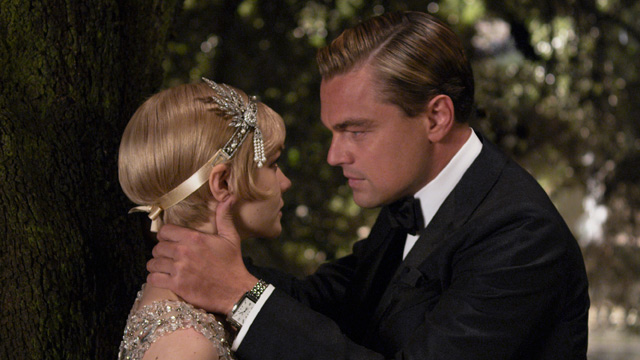
The Great Gatsby (2013, Warner Bros. Pictures)

For comparative purposes, I'm going to purposefully ignore a lot of the over-arcing narrative similarities between the two films, as I feel that given Rouge's somewhat deliberately generic nature (as part of the form it is paying homage to) render these a little too simplistic. Instead, with particular focus to the introductions of the two films I will attempt to analyse the use of technical and cultural codes to show the similarities between the films.

Both films open with a nod to their respective time periods - whilst there is no 'red curtain' in Gatsby there is another nod to the artificiality of creating the era. Rouge's opening had us examining the first type of cinema, on a long tracking shot seeing the title card of 'Paris 1888' framed in a particularly silent movie manner. Gatsby repeats this trick, showing us the 'actual' credits for Warner from the 1920s, attempting to at once immerse us and make us aware of the period. 

The one odd concession that Luhrmann has given to translating the piece to the screen is that he has given us a wraparound narrative in order to allow us access to Carraway's thoughts. So it is that we see Carraway sitting in a darkened room, looking bedraggled, recovering from alcohol abuse in a grey sanitarium. It's a neat little trick that allows Luhrmann to comment somewhat on the hedonistic excess of the time. Much like the absinthe drinkers of Paris 1888. Yes, Rouge's wraparound is incredibly similar, in fact, down to the depressed alcoholic writer (McGregor's Christian) who has taken to typing out his thoughts on a typewriter - with key phrases that then appear on-screen. Granted, in Gatsby, Luhrmann has graduated beyond simple diegetic titles, allowing his words to wisp in and out of the screen like Gatsby's dreams. It's as if he's somehow decided to re-do his opening with a bigger budget and a more serious text. Yet that itself seems false.

The similarities continue. Gatsby is alluded to much like Satine, seen in glimpses and flashes (before his grand appearance, as fireworks explode, to Gershwin's Rhapsody in Blue, akin to Satine's Diamonds Are a Girl's Best Friend) and we follow the same trick of 'rewinding' film, via a grand reverse tracking shot. In Rouge, this is to rewind to a more glamorous, pre-absinthe, revolutionary Paris. In Gatsby, it is the city of promise, New York. Once again, the two are like-for-like in their 'diorama-esque' artificiality. At this point, I began to wonder if Luhrmann was trying to point to his past glories - that he has already made 'The Great American Australian Movie'. 

And, much like McGregor's Christian, we see Maguire's Carraway arriving in New York, complete down to the freeze-frame on his young, naive face, highlighting the contrast from the opening and the change in mood. It's quite unbelievable. 

And there's more. The recurrent motif of 'Come What May' replaced by Lana Del Ray's 'Young and Beautiful', the party scenes, full of frenzied close-ups, then repeated in stop-motion slow-mo to emphasise the underlying seediness. It's as if we're remaking the same film.

Which leads me to the question I pose - why re-do Moulin Rouge? Particularly when Luhrmann has been given one of the most incredible pieces of source material to start from? It leaves me with one of three thoughts, and none of them are particularly pleasant ones. 
1) Luhrmann's bag of tricks is sadly empty, and this is all he knows. I would hate for this to be the case - there are moments of Gatsby that are incredible. The most stunning is the climax in the Plaza Hotel in chapter 7, where oddly enough, Luhrmann dispenses with the gimmicks and removes all non-diegetic sound and any sort of whizzy special effects, putting the actors' performances front and centre. It almost makes it seem as if these events are played out in some sort of alternate-universe stage play, and is invariably both striking and useful revision material for all English teachers to utilise post DVD-release (this one included!)
2) Luhrmann believes that Rouge, somehow needed to be improved upon, and by placing a classic piece of literature on top of the framework of that film, it is his chance to revisit and 'fix' the film. Despite its flaws, Rouge is (forgive the pun) a sparkling diamond of a film, and one that stands on its own two feet without the lineage of a long-revered text to back it up.
3) Luhrmann is Gatsby. At the end of chapter 6, after telling Nick Carraway of a moment, five years ago, where they went for a walk, Gatsby talks about repeating that one inescapable moment. Rouge was like nothing I had ever seen on screen, a level up from Romeo and Juliet. Carraway tells Gatsby that he can't repeat the past. Gatsby, looking around 'wildly' responds, much as I sadly feel Lurhmann would,

Why of course you can!

Sunday, 7 April 2013

Relics...

So I discovered, while cleaning my old PC, all of my university level film pieces. As such, I thought I would share one, which I found interesting and still relevant. It's on violence - one of my favourite, and most hated elements of cinema. Hope you enjoy...


Contrasting Views -                                                                         
The Reversal of the Impact of Violent Sequences In Relation to Genre
                                                                                                                  Martin Hollis

            “Penn and Peckinpah helped establish the stylistic features of ultra violence, while subsequent filmmakers have replicated and exaggerated them. Squib-work, multilateral filming and montage editing utilizing differential rates of slow motion - this combination of elements became one of the two dominant aesthetic forms of ultra violence”[1]

            Lisa Parks’ claim that acts of physical aggression take on different meanings depending upon the genre to which they are attached is an important one. Indeed, the idea that two similar violent acts can raise two different meanings is one that complicates many other theories, most notably those seemingly raised by the effects model. If, indeed, Parks’ claim is accurate, this would seemingly count against the validity of the effects model, in that one cannot justifiably state an act is explicitly violent, unless one see the context in which it is shown. This essay will evaluate Parks’ claim by looking at two similar fight sequences from two different movies - Fight Club (Fox, 1999) and Mission Impossible 2 (Paramount, 2000), and examine how, if at all, the meanings of the violent acts in the sequences can be read differently. The sequences examined will be the narrator and Tyler’s first fight from Fight Club and the final fight between Ethan Hunt and Sean Ambrose in Mission Impossible: 2.
            Both sequences are ostensibly similar, indeed, they are both fist fights between two men, yet the films themselves are not so. watching Mission Impossible 2it is more than likely that the viewer has a knowledge of Tom Cruise and his star role - that of the action hero from Top Gun, the undying star of countless films, and indeed, Mission Impossible 2’s prequel. Also worth noting is the involvement of John Woo, who is renowned for directing action sequences. With some (or all) of this knowledge, the viewer no doubt expects a ferocious action film, in the vein of other Cruise / late 90’s films (eg. The Rock, Armageddon, et al). It is with that knowledge, having just witnessed a fantastical motorcycle sequence, which climaxes in both characters essentially flying towards each other, that the viewer enters the final fight. Whilst the sequence may be seen as more realistic than the others - the two men are both exhausted, both claw and scrape at each other - the sequence is still rooted in many of the conventions of the action film. Indeed, the film follows many of the conventions previously mentioned that were established by Penn/Peckinpah, and as such, the violence seems accessible, not overtly brutal, as it is recognisable as being within accepted norms of violence within action films. During the sequence, an almost tribal drum sounds out, punches and kicks are given extra weight thanks to the assortment of non diegetic sound effects placed over the soundtrack, and Cruise’s character is subject to that staple of action movies - the honourable wound, that of suffering as a way to create new strength. As Rikke Schubart states,
            Identification is with the hero as victim, not victor. In spite of the apparently
            feminine position, there is nothing effeminate or womanish whatsoever about the
            passions of the action hero. Instead of weakening the hero, the pain induces new
            strength.[2]

This staple is shown in Mission Impossible 2 as Ambrose cuts Hunt’s face, then chest, and nearly drives the knife into his eye. The ensuing sequence shows Hunt throw Ambrose off him, therefore gaining his strength through his weakness. Viewed within the context of the film, then, the violent sequence of Hunt’s face being cut serves the established rules of the action film - the viewer sees the wound not as anything excessive, comical, or grotesque, but as a necessary evil for the character to overcome their enemy. It is also here where the sequence becomes much more aerobatic, with Hunt kicking in mid air, both men running and jumping at each other. Interestingly, although the sequence is much less realistic in the sense of the world outside of the film, within the film, and the action genre itself, this is not the case. The violence in the film, much more in vein with other action heroes (such as Schwarzenegger, Stallone, Willis etc) in its excess seems more fitting with the sequences of fantastic action which preceded it. Having been attacked previously, the violence in the final sequence is then seen as both justified and serious, given Hunt’s new quest for masculine superiority, after having received the subverted threat of castration (Schubart believes the honourable wound to represent the threat of castration[3]). The film’s violence, therefore is much more distant from the viewer in this case, as the violence, although realistic with regards to the film and genre, is not believable in the world outside the film. Interestingly, however, thanks to the conventions of the genre and the actions portrayed in the sequence, the violence is taken as credible and believable with regards to the characters.
            With Fight Club, it is probably interesting to note any ideas the audience may have of its stars prior to viewing the film. Neither Brad Pitt nor Edward Norton were previously renowned for action films, and, especially in the case of Norton, both had previously starred in films which may be considered more intelligent than normal action films. With the knowledge that neither of these actors is renowned for their action / fighting skills, the idea of a film about these two actors engaging in fights is slightly strange. The film, indeed up to the first fight sequence, most closely resembles a black comedy, or at least, has a sharp comic edge to any of the drama onscreen. The sequence, which actually cuts into the start of the first fight, is an entirely comic one, chronicling Tyler’s jobs and his efforts to subvert them. With this idea of a comic genre, the effect of the fight sequence is much different to the one in Mission Impossible 2. Firstly, most noticeably, is the lack of exaggerated non diegetic sound effects to emphasize the strength or ferocity of the hits that either character receive. Secondly, the attacks themselves are much less graceful or aerobatic as those in Mission Impossible. Rather, the attacks are much more grounded in the real world, and as such, both the narrator and Tyler show much more pain from those attacks. As the characters then start to struggle with each over, Tyler even falls over during the fighting, unable to keep his balance - far from something seen in fight sequences in other films. Despite the fighting looking more realistic, at least in relation to the viewer’s world, the violence is almost absurd, and unlike that in Mission Impossible, almost comical. Perhaps, since the viewer is used to seeing fantastic, or exaggerated fight sequences like those in Mission Impossible, in relation to film, a realistic fight seems out of place. The fight sequence in Fight Club can then be seen as not realistic within the context of cinema “realism“, or at least the accepted levels of realism within action films. This over-realistic violence, despite being closer to the viewer’s world can therefore be seen as something other than real, something comical, something absurd. Of course, when one views the film again, with the knowledge that there is no Tyler, the fight sequence takes on another level of humour. The viewer can relate to a flashback sequence at the end of the film, which replays the first fight, except without Tyler. Viewed in context with the rest of the film, the fight therefore is not seen as excessive or brutal through its realism, but a blackly comic and absurd sequence. Indeed, this violence may be seen as comical, and not serious like the far more exaggerated sequence in Mission Impossible due to the fact that, as some critics claim, the viewer is more desensitised to the violence in the latter[4], and the acceptance of the more fantastic, outlandish violence stems from this apathy to it. The violence in Fight Club, different in both style and with a lack of excess, and indeed, perhaps more brutal than that in Mission Impossible, creates a sense of “other”, and it is this “other” that creates the comical effect of the sequence - that this violence is so different to what is expected and accepted, it is amusing in its pursuit of realism.
            Both sequences from the films are certainly classifiable as violent, yet viewed in context with the rest of the film, they take on entirely different meanings. Whilst the violence in Fight Club is certainly more recognisable as realistic to the viewer, the fight does not have as brutal an impact as one might expect due to the audience’s unfamiliarity with this style of violence. Mission Impossible is then seen as more instantly recognisable as a violent sequence, thanks to the conventions of the action genre which it utilises during the sequence from the thuds of the soundtrack, to the viewer’s reaction to the exaggerated punches and kicks thrown. Therefore, these two sequences, which may have been looked at conversely were they viewed in the “effects model”, seem to support Park’s claim, as viewed in context with the film as a whole, they take on different meanings entirely.


[1] Stephen Prince, Graphic Violence In The Cinema, from Screen Violence, 1999, Rutgers, Pg13
[2] Rikke Schubart, Passion and Acceleration, from Violence and American Cinema, 2001, Routledge. Pgs 196-197
[3] ibid, Pg196
[4] Andrew C. Epstein, Desensitize This” http:// the-underground.ca/ html/archives/issue_0/commentary_2.html

Tuesday, 3 July 2012

Women-Games-Cinema

It has most definitely been a while, however I feel that it is an important time to update this blog with something that has been popping up in my Twitter feed and mail box constantly as of late. More and more, the issue of gender and violence, most specifically sexualised violence, has been a topic of note in both the film and gaming community, and it's important to look about the effects of both of these in terms of wider representations to the (mostly) male audience that consumes these texts.

Therefore, this week's texts will encompass both the medium of film and game. Of course, it is problematic in any instance for a male to try to write about the female experience. Having had neither a womb nor the range of male interactions that any woman has, it is difficult to articulate accurately the 'right' reaction to this. However, I feel that it is possible to objectively examine this area with broad analysis.

This week's texts are -


Prometheus (2012, Fox Studios)


Tomb Raider (2013, Eidos Interactive)


It is firstly worth noting that, should one wish to search, the simplistic 'Tomb Raider' Google image hunt brings up a bevvy of buxom positions, several featuring Mrs. Angelina PittJolie, and many a polygonal delight of chestbursting proportions. Such sexuality has plagued Tomb Raider's game design since inception, and it is impossible to read any title, even a 'reboot', without considering these as a matter of course.

Both of these narratives actually draw from the 'Silence of the Lambs / Prime Suspect' field of story telling, featuring, as Nicola Rehling describes,

tough female heroines with whom we are encouraged to identify [that] considerably complicates the rigid schema put forward by Laura Mulvey in her foundational essay “Visual Pleasure and Narrative Cinema” (1975), whereby the cinematic apparatus engineers identification with the sadistic, masterful male gaze. At the same time, the demonization of non-phallic masculinity and/or sexual deviance that this involves inevitably works to shore up the values of normative, heterosexual masculinity, since identity is always constructed through
“the relations to what it is not, to precisely what it lacks, to what has been called its constitutive outside” (Hall 4).
In essence, both of these texts are interesting BECAUSE of the fact that the protagonists are female. In her seminal work, Hardboiled and High Heeled, Linda Mizejewski points to the fact that

these films focus on how these women [...] are pictured and the fantasies these those pictures induce.

We (men) are drawn to these films because they feature the tough, feisty, sexually attractive role of a female in power.

This is complicated somewhat in Prometheus not simply because of the [spoiler] 'caesearean' scene (not even Ridley Scott can call it an 'abortion' yet) but because of the fact that Noomi Rapace's Elizabeth Shaw does indeed conform to the stereotypes of the female role despite Scott's own desire to not have her be limited to it. Hence, we see her engage in sexual activity, allowing her to be clotheless for a portion of the film. We see her stripped somewhat of her attire later, after said 'caesearean' scene, so that she can scamper around the ship (a la Weaver in Alien) in her underwear, and we see her constantly overpowered due to her own feminine abilities. I'm not actually admonishing the latter - it is important to recognise differences in the genders, as I will hopefully demonstrate when moving on to Tomb Raider - but it is important to note.

Is Shaw as revolutionary as Weaver's Ripley? Hardly. However, despite these very male concepts of her, she does at least function beyond the desire to have someone 'to be looked at'. In fact, it's very likely that Scott chose Rapace due to her previous career in the Dragon Tattoo films, perhaps suggesting an attitude of 'look at me at your peril'.

Prometheus does, despite its many problems, attempt to make Shaw a 'strong' (an odious term) character, one that can be admired despite, or perhaps, because of her flaws. While not as symbolic or fascinating as Ripley, Shaw does indeed have faults, quirks, and is developed enough to seem 'real'. Yet, once more this is problematised because the entire creative team behind the film is male, and as such, are presenting a male view of femininity. Combined with Ridley Scott's focus on visual pleasure, often at the expense of narrative pleasure, there is a beauty to the film, and as such the female form.

Yet, as Teresa De Lauretis points out in 'Rethinking Women's Cinema', there is a strange paradox. We often think of a 'feminist' or 'forward thinking' text as something that has been 'de-d' - deaestheticised, desexualised etc. And as Lauretis makes clear, this is a destructive paradox. Surely females need to retain those things that mark them out as female - and of course, a particular form of sexuality must be present (although this is likely not the time or place to pile queer theory on top of an already thorny subject.) Shaw, despite her cavorting in underwear, appears to be the closest thing, in post-Bridesmaids world, to a rounded female character.

Which brings us to Tomb Raider - already having drawn ire and scorn from the internet. Of course, the game is not out until the start of 2013, so it is difficult, and perhaps unfair, to pre-judge the title (as the BBFC make oh-so-clear, CONTEXT IS KEY) as 'problematic'. Yet, the producers and PR behind the game have not exactly made the game seem anything other than problematic.

Of course, we speak of the sexual assault scene - one that Crystal Dynamics have renamed and reconfigured several times, from 'attempted rape' to saying

 Sexual assault of any kind is categorically not a theme that we cover in this game.
Below is the troublesome clip that began all this.


If one were to watch the clip, specifically around the 2:21 mark, it's fairly clear that the physical contact (lingered on by the camera) is sexualised.

In an already famous interview, Ron Rosenberg claimed that,

When people play Lara, they don't really project themselves into the character. They're more like 'I want to protect her.' There's this sort of dynamic of 'I'm going to this adventure with her and trying to protect her.
Of course, this misses, for instance, the female gamers who may, heaven forbid, have actually identified with Lara. Like Shaw in Prometheus, Croft is once again in a troublesome place - one where she is 'to-be-looked-at' (thanks, Mulvey) but also is trying to represent a 'realistic' form of what it is to be a female. One doesn't need to try too hard to imagine the scripting of this sequence - Lara becomes 'tough', a 'killer'. She's a woman, so she needs a compelling reason to become this. Therefore, have her be sexually assaulted, and voila, instant justification.

Except, not really.

When was the last time sexual assault to a man was given as a justifiable reason for their behaviour in either film or game? Would Marcus Fenix be 'more relatable' where he abused in the past? It's clearly wrong to assume that this is in any way an excusable account for the actions. Shaw begins to look more and more desirable as a character at this point.

I am certainly not for saying that sexual assault is 'too touchy' a subject to consider in games. However, when it stands to become the very element that defines a long-established female role model, one who was more (but let's not remember how she was initially conceived) than a sex object, it is simply wrong.


So where does this leave me? To be honest, I'm not sure. Female characters, created by men are sadly only ever going to form a particular representation of the female experience. But, of course, that's the issue with all media. What males in the media must consider, however, is years of privilege, and of course, the fact that there is now a wave of females, too large for them to ignore, who are simply demanding that their experiences and desires should be covered. By all means, keep the visual pleasure intact - 'de-feminising' texts can be as dangerous as overly sexualising them - but surely, surely there must be a better way.

I'm very interested to head any comments, or changes people should wish to suggest to this article. I'm torn by even the fact that writing about it, as a male, is perhaps as problematic as both the texts covered. Any suggestions or ideas would be welcome here.


Sunday, 19 June 2011

The Laws of Diminishing Returns.

Summer - Blockbusters - Massive Box Office Reciepts. Or so the formula goes. Yet 2011 has still to yield a film that people will rejoice for.
Perhaps people may argue that we started too early with Thor (May, in UK) or that we had not fully defined, as a cinema, a summer status, but this year has yet to really show its teeth. With two noticeable departures.


Pirates of the Caribbean - On Stanger Tides (2011)

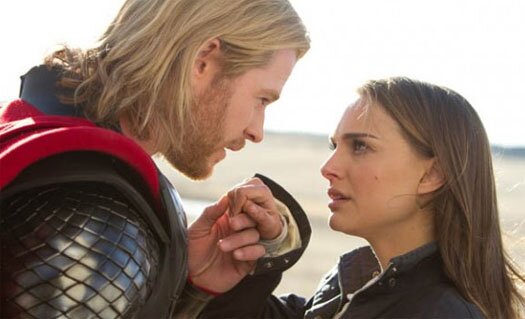
Thor (2011)


Perhaps there's something in the water at the minute, or we are simply in a mode of nostalgia, but the world seems to be content to live in its past glories. 

Whether this is Marvel films, now free from its shackles and developing superhero epics similar to Spiderman's ten years ago, or Thor, the new breed, born of the renegade director, much as Hollywood cinema gave birth to the renegades of Bay et al in the 90s.

What to think of with all this? Where all the proper films? Well, the first idea to establish is that, like it or not, these ARE the proper films of the Summer, and for goodness sake, suck it up - they are enjoyable. Obviously, Christopher Nolan is being watched hawkishly on his take on the concept, but one must not forget that, 3D or not, Superheroes are designed to bring the world happiness, joy, the concepts that we somehow cannot forge on our own advances. 

Long live the superhero genre, as long as it taps into what we need to survive. 

Monday, 9 May 2011

Sequelitis


It has been a while, for sure, Blogspot, but this page refuses to die, and anger at the current state of mainstream Hollywood refuses to die either.

Sequels.

The word strikes an odd balance between love and hate into hearts. There is the familiarity of the known, that the characters are established, less exposition is needed, that the story will progress. These are, obviously, fallacies, for any high budget film must ultimately cater for a new audience as well. Looking at Steven Neale's work will show that there is a process of what he called "re-engagement" with texts that must go on in sequels. It may be hidden in a veneer of comedy / crises etc, but it is there. So why do we bother? Aside from the fact that cinema-going is a circular experience, from the familiarity of the foyer, advertising new experiences, to the smell of popcorn and the trailers that preclude every film, we are happy with what we know. There is safety, familiarity to it. Yet this can also lead to frustration.

Most recently, several internet message boards lit up with the familiar frustration of watching a Marvel adaptation, waiting until after the credits (as is now expected) and AGAIN seeing Samuel L Jackson enigmatically emerge from the shadows to dispense more SHIELD nonsense in anticipation for the 'Avengers' film - something that must go down as one of the all time meta-sequels, whenever it finally emerges.

However, to turn the gaze more directly to 2011, there are two films in particular that strike this reviewer as  un-needed sequels. The motive must purely be directed to the financial (as much as people may be loathe to admit it, SOME people in Hollywood do actually wish to make an entertaining tale as well as money.)


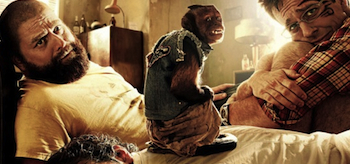
The Hangover 2


Pirates of the Caribbean: On Stranger Tides

These films have relied on the goodwill bestowed to their predecessors. Whilst The Hangover is only a second in the fanchise, fans have put up with the theory of diminishing returns for PotC 2 and 3. The departure of Bloom, Knightley, Verbinski et al may be, to some, a pleasing thought, however to many of the long term fans, the removal of a salient aspect of fan fiction and speculation must bring nothing but revulsion. Why not name these the 'Captain Jack Chronicles'? Because the brand sells.

Likewise The Hangover. Bradley Cooper has clearly stated that the sequel should follow the formula of the first film, which may defy logic to the film literate. Cooper has, however, inadvertently stumbled upon the success of a Hollywood picture. 

Give the people what they want.

When one thinks of the great cinematic successes of the time, Cameron no doubt springs to mind. What people may not realise is that he played the same card in both his films. Titanic and Avatar may as well be the same films,as class / nationality / species divide two loves who are destined to be together, overarched by a much larger war / tragedy. 

What people need to realise is that the joy of Hollywood may not be in the new, but in the old and familiar. It therefore comes as no surprise to see that 2011 has more sequels than any other year. In any other camp (barring videogames) this would be a surprise. Hollywood, however, has refined it into a cheap, disposable commodity.

Now who's up for Transformers 3?

Tuesday, 8 June 2010

Inside ME?

Michael Winterbottom has been a film-maker that I have admired for a long time. I enjoyed

Wednesday, 19 May 2010

Allegories

Having now seen Robin Hood, I realised how much it was an allegory of our time. There's trouble with the economy because the king is fighting a war on foreign lands. It's pretty straightforward. This got me thinking about the Hollywood industry and its history with allegories - nothing new, and certainly elements of blockbuster films, (and of course, science fiction) have always had elements that resonate to their time. What did intrigue me, however, was the swing in style of allegories since September 11th 2001 that have emerged from the Hollywood system. I am hoping to explain this change, exemplified by several blockbusters of the past 15 years, and show that the Hollywood system has reflected the political, and ideological trend of (particularly) the USA. The films are -


Independence Day (1996, 20th Century Fox)


Godzilla (1998, Tristar Pictures)


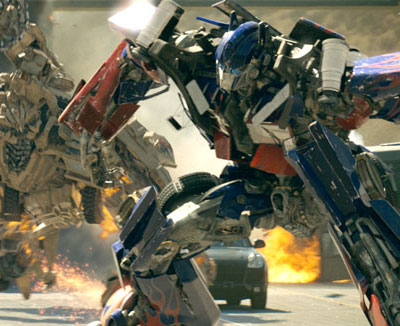
Transformers (2008, Dreamworks)


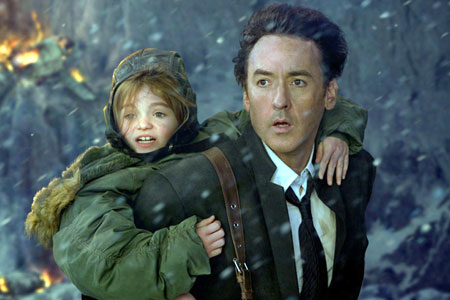
2012 (2009, Columbia Pictures)

The aim of this piece is to spot the shift both in plot and ideology from the films pre-September 11th to those that are more recent. While there are, obviously, films that may not fully conform to this (Nicolas Cage's output in the 90s particularly seems to be more introverted.) there is certainly the sense that the mid to late 90s showed a sense of America's output to other countries, to show America as peacekeepers of the world. 

More recent films, however, have emphasised America's inability to both prevent, or control, attacks from foreign films. While it is 2012 that will be discussed, certainly Emmerich's other output, The Day After Tomorrow not only conforms to this, but also plays into 2012's fear of global catastrophe - however, it places the blame of this upon the world's shoulders - another level of allegory.

The aim therefore, is three fold - Firstly, I will explain how, briefly, and without dwelling in detail, on the effects of September 11th on America - much of this from my own experience (I lived in America from 1999-2002, and visited New York both in July 2001, and 2002.) I am not intending this to be comprehensive, and will be the first to state that there is much writing on this already - in fact, much of what I discuss is based on Dixon's Film and Television After 9/11. Secondly, I will aim to show how both Independence Day and Godzilla demonstrate a pro-American point of view; one that is specifically focused on America's ability, both as a community and ideologically, to 'solve' the world's problems. These are problems that - like films post September 11 - are not America's fault, but ones in which America finds the way to fix
Finally, I will show how films after September 11th, particularly, Transformers and 2012 represent a post 9/11 view, one of more hopelessness, one of survival, and one in which American ideals, whilst not sidelined, are shown as not fully effective at solving the problems of the diegetic worlds. 

Pre September 11th, it could be argued that America saw itself as 'invulnerable' and a country of ideals that were not questioned, ones that held democracy and strength as hallmarks of its Nation. Films, therefore reflected this trend to strength - the American Hero, the ideals of truth, freedom and democracy seen as ones that should be held throughout the world.
It may be argued that this could be seen as 'cockiness' by other countries, however, it was certainly one that put an emphasis on America's achievements. 
After September 11th, one of the strongest feelings in my immediate circles of friends was one of shock, that America could be seen as a target, that someone would 'dare' to attack it. This immediate feeling of weakness certainly translated into a feeling of humbleness, something I personally witnessed on a trip to New York, where the once brash, loud citizens of the city transformed into well mannered, quiet people. Something certainly changed in the country. While once, America could be seen as a bastion of ideals that the world should follow, post September 11th, these ideals changed, and could be questioned.
This piece is certainly not a critique of American politics, and I do not wish to dwell on them too long. However, the clear shift in attitude of the country as a whole must be taken into account before examining the following texts.

Pre 9/11.
Both Godzilla and Independence day share the same ideal around their central conflict. This is that the problems of the film are not created by America. While the films post Sept 11 are also of foreign origin, it seems more important that the 'villains' of the pre 9/11 films are worth examining. In Independence Day, it is blatantly, the aliens, those that have no concept of human (read - American) democracy. They invade without warning, they pose ominously over the most important cities of society, without reason, and without (so it seems) motive. It is this lack of motive that is most interesting. There is no reason to attack America (or, of course, the other cities in the film, but America is where it focuses). There is no complaint with America's politics, its policies, or its ideals, or indeed its people. There is a simple enemy that, with its lack of reasoning, or its ability to communicate with its nemesis, represents everything that can be seen as anti-American. 
More than this, the hero that actually manages to save the world is (what can best be described as) John Q. Everyman - a 'white trash' trailer bound American, one who represents the best of America - individual, deeply heroic, family oreinted, despite his outward flaws. And he destroys the ships with a WW2 era plane. 
Finally, the last important aspect to examine is the seemingly flippant line at the end of the film - 

"Get on the wire, tell them how to bring those sons of bitches down." 

Effectively, this is America using its own knowledge and experience to influence the rest of the world. The following montage of world cities, utilising the American Way to tear down the alien ships conforms to this idea - that America and its ideals are the way to deal with conflicts, and that they will not only deal with, but triumph and restore an equilibrium to the world. 

Godzilla, while set in the US, is interesting in its concept - that the enemy was created on this planet - by the French. By radiation. And it then attacks Japanese ships. There is surely some sort of re-writing of WW2 history here. Perhaps the most galling concept is the idea that a radiation attack upon the Japanese was not in anyway  influenced by the Japanese. Indeed, America in many ways disowns its own history of nuclear attacks, claiming that it would not dare to release such attacks. This is emphasised by Matthew Broderick's Dr. Niko character (someone channelling the mish-mash of cultural identities that ultimately created America) who constantly chastises the attacks throughout the film. 
Once again, however, it is the Americans that 'solve' the problem and bring down the creature, not of their own making, this preventing it from attacking any other nation. Again, it is a combination of the American miliatry and an individual American 'everyman' that bring the creature down. And once more, it is the case that America, and its multicultural, intelligent democracy can fix problems of not only its own country, but of others.


Post 9/11.
It is perhaps remiss to mention Pearl Harbour - one of the last films to be released prior to 9/11. While America is indeed attacked in the film, there is not (despite fleeting *less than 1 min sequences*) any reason to empathise or explain the Japanese motives for the film.
Post 9/11, films such as Spiderman, Zoolander etc changed their landscape and sequences. Spiderman, most explicitly, ended with an American Flag in full view as Parker reached his potential, the innocent, attacked individual rising up against the pressures of the outside world. Whilst this is certainly a trend of films, it is interesting to examine the idea that films have more reflected the concept that America is not immune from the horrors of the world. 

Transformers perhaps best exemplifies the post 9/11 mentality. This is most apparent in its Army/Marine storyline. The men are seen as out of their comfort zone, and ones who, whilst manage to adapt to the situation around them, are out of their depth, and ultimately unable to influence the actual events of the film.
Once more, aliens attack the world. Unlike Independence Day, however, the US does not manage to resolve the issue - they are unable to even deal with the concept. In fact, one of the key emotional sequences involves the 'unfair' capture of one of the 'good' aliens, perhaps referencing Guantanamo Bay style methods - in effect, criticising the very country that the film is created for. The army, whilst managing to survive, do not in anyway really influence the outcome of the film. This is the key idea that permeates post 9/11 film. That America is concerned with survival, and survival of its ideas against outside influences. The American ideals do indeed remain, but it is ultimately the Autobots that triumph in the film, and who end up 'protecting' the earth. America, in many ways is left with its 'pants down' (thank you, Turturro) against the alien outsider.

A far cry from Independence Day.

Finally, 2012. In my own memory, there has not been a blockbuster American film that has taken as many influences from as many other cultures as possible (obviously primarily Russian). Not only this, but the outside influence (that is not even human, but completely UNAVOIDABLE - a comment on terrorism?) is one that affects the whole world - perhaps explaining that any problem that affects the US affects the whole world. Does this then 'sell' America again in a manner similar to the pre 9/11 films? 
While the protagonist of the film is once again American, his family is disintegrated (although he ultimately reunites with them) and is not the sole hero of the film. Indeed, the President of the United States is killed, as is Washington DC. Does this perhaps state that America now realises it is not the only nation in the world? That its ideals are not THE answer to society's problems?

Some may argue that blockbusters are unimportant in terms of filmic value. Far from this. As they need to endear themselves to the world, they need to reflect current world sensitivities, and push away from common world views. Consider the GI Joe film - a title shift away from 'Real American Hero', right? 

Perhaps, for the next trends in current world view, we should look to the biggest films in the world.